1948 Jefferson Nickel Value No Mint Mark: History & Prices

Your Old Coin Could Be Valuable!
Identify It & Know Its Real Value — Free Download


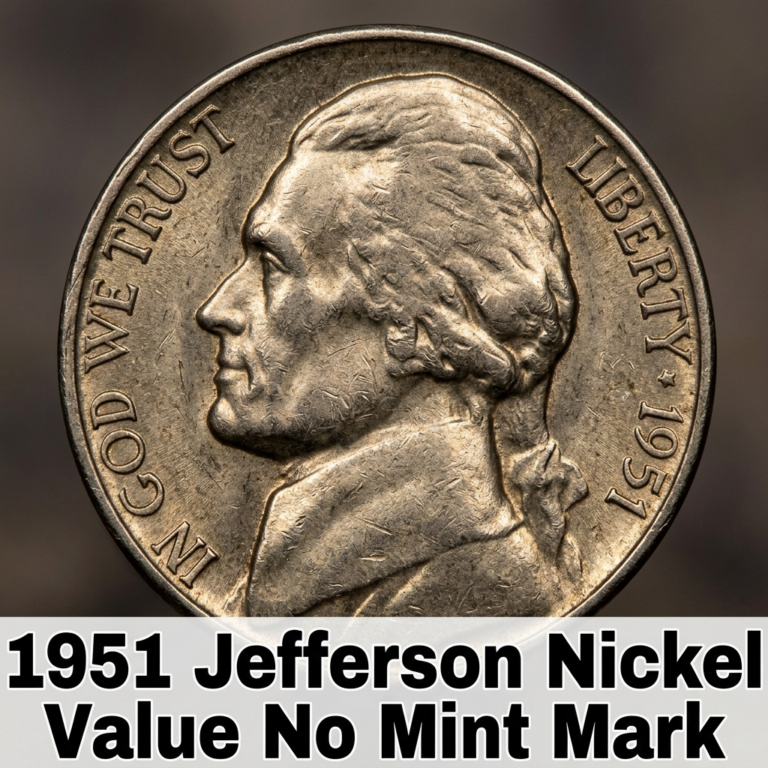
The 1948 Jefferson Nickel with no mint mark is worth anywhere from $0.10 in worn condition to over $3,500 in pristine, high-grade condition. While most are common pocket change, finding one with “Full Steps” can significantly increase the value for collectors and lucky finders alike.
| Condition | Estimated Value |
|---|---|
| Circulated (Good to Extremely Fine) | $0.10 – $0.50 |
| Uncirculated (MS60 – MS64) | $1.00 – $15.00 |
| Choice Mint State (MS65+) | $25.00 – $150.00 |
| Rare Full Steps (MS66 – MS67) | $500.00 – $3,500.00+ |
Identifying the 1948 Jefferson Nickel No Mint Mark
If you just pulled a 1948 nickel out of a jar of old coins, the first thing to check is the mint mark. During this era, nickels minted in Philadelphia did not feature a mint mark. To verify this, look at the reverse (back) of the coin, specifically just to the right of Monticello, the historic home of Thomas Jefferson. If that area is blank, your coin was struck at the Philadelphia Mint.
While millions of these coins were produced, their historical context makes them a favorite for many hobbyists. Many Americans are turning to CoinKnow to differentiate between common dates and rare strikes. If your 1948 nickel looks exceptionally shiny or has very sharp details, it might be worth more than a few cents. You can use a top coin identifier and value app to get an instant estimate of its state.
Philadelphia struck over 145 million nickels in 1948, which is a massive amount. Because of this high mintage, simply having a 1948 nickel doesn’t make it a “lottery ticket.” However, the condition of the metal and the sharpness of the strike on the back of the coin are the two primary factors that determine if you have a common coin or a valuable collector’s item.
Condition and Grading: What Makes it Valuable?
Professional grading is the key to unlocking the true potential of your 1948 nickel. Coins are graded on a scale from 1 to 70. Most 1948 nickels found in circulation today fall between “Good” and “Extremely Fine.” In these conditions, the coin isn’t worth much more than its face value or a small premium for its age.
Your Old Coin Could Be Valuable!
Identify It & Know Its Real Value — Free Download
However, “Mint State” (MS) coins are those that never entered circulation. They still have their original “mint luster”—the frosty glow that comes from the high-pressure strike at the mint. Collectors pay a significant premium for coins that have avoided scratches and wear. You can view the current 1948 Philadelphia nickel price guide by grade to see how quickly the value jumps as the condition improves.
For everyday Americans, identifying the difference between a nickel worth $0.25 and one worth $25 can be difficult. High-end collectors look for the “Full Steps” (FS) designation. This refers to the steps of Monticello on the back. If at least five steps are clearly visible and not blurred together, the coin’s value skyrockets. Using CoinKnow can help you magnify these small details to see if your coin qualifies for this rare designation.
Your Old Coin Could Be Valuable!
Identify It & Know Its Real Value — Free Download
| Grade Label | Appearance Details | Typical Price |
|---|---|---|
| VG 8 (Very Good) | Heavy wear, motto is readable. | $0.15 |
| EF 40 (Extremely Fine) | Light wear on Jefferson’s hair. | $0.50 |
| MS 63 (Uncirculated) | No wear, some marks/scratches. | $5.00 |
| MS 66 Full Steps | Perfect steps, nearly flawless. | $450.00+ |
The “Full Steps” Rarity Explained
The Jefferson Nickel series is unique because of the “Full Steps” (FS) criteria. On the reverse of the coin, there are steps leading up to the entrance of Monticello. Because the metal used in nickels is very hard, the dies often didn’t strike the steps clearly, or they were worn down quickly during production. Most 1948 nickels have “mushy” steps that look like a flat ramp.
A 1948 Jefferson Nickel with five or six clear, unbroken steps is a rarity. Collectors are willing to pay thousands for these because they represent the finest possible strikes from the Philadelphia mint. Even a tiny scratch across the steps can disqualify a coin from this status. If you think your nickel has sharp lines on the building, it’s worth checking out the latest 1948 nickel value data to see what the most recent auction records show.
Finding a “Full Steps” nickel in your pocket change is nearly impossible because circulation quickly wears those lines away. However, many people find these in old “unopened” rolls or collections passed down from grandparents. If the steps are crisp, do not clean the coin! Cleaning a coin with chemicals or a cloth will destroy its numismatic value instantly.
Your Old Coin Could Be Valuable!
Identify It & Know Its Real Value — Free Download
1948 Jefferson Nickel Error Varieties
Errors are another way a common 1948 nickel can become a high-value item. While the Philadelphia mint was generally efficient, mistakes happened. Some of the most common errors for this year include “Die Cracks” and “Double Dies.” A die crack looks like a thin, raised line of metal on the surface of the coin, caused by the striking die breaking under pressure.
Another interesting error is the “Off-Center Strike.” This happens when the coin blank isn’t perfectly centered when the hammer hit it. If you have a 1948 nickel where 10% or 20% of the design is missing and the coin is lopsided, you have a valuable error. Such errors can sell for $20 to $100 depending on how dramatic the shift is.
Double Die Obverse (DDO) or Reverse (DDR) errors are much harder to spot with the naked eye. This involves a doubling of the letters or numbers. If you notice the “1948” looks like it was stamped twice, you might have something special. Tools like CoinKnow are excellent for helping you identify these minute details without needing to buy expensive magnifying equipment immediately.
Your Old Coin Could Be Valuable!
Identify It & Know Its Real Value — Free Download
| Error Type | What to Look For | Potential Value |
|---|---|---|
| Off-Center Strike | Design shifted to one side. | $15 – $100+ |
| Die Crack (Cud) | Raised lump of metal on edge. | $5 – $50 |
| Lamination Error | Peeling or cracking surface. | $5 – $20 |
Why the 1948 Nickel History Matters
Following the end of World War II, the United States was in a period of economic boom. The 1948 Jefferson Nickel represents a time when the “War Nickel” (which contained silver) had been phased out, and the mint returned to the standard copper-nickel alloy. This makes them significantly less valuable in terms of raw metal than the 1942-1945 versions, but more interesting for strike-quality historians.
In 1948, the Philadelphia mint produced 145,382,000 nickels. Because so many were made, they weren’t hoarded like silver coins were in the 1960s. This means that while they are easy to find, high-grade examples that remained in pristine condition are surprisingly scarce. Collectors often seek out these “survivors” to complete their Jefferson Nickel albums.
When you look at your 1948 nickel, you’re holding a piece of post-war American history. It was a time of growth and industrial might. Whether you keep it for its history or its potential dollar value, it remains a staple of American coinage. For most people, the hunt for the “perfect strike” is what makes this hobby so rewarding.
How to Store and Protect Your Coins
Found a shiny 1948 nickel? Don’t just throw it back in a jar. Even a high-grade coin can lose value if it gets scratched by other coins. To preserve the value of a potential MS65 or Full Steps nickel, you should store it in a PVC-free “flip” or a plastic coin capsule. These protect the surface from oils on your fingers and moisture in the air.
Your Old Coin Could Be Valuable!
Identify It & Know Its Real Value — Free Download
Avoid using tape or cleaning agents. Many beginners think that “polishing” a coin will make it worth more, but the opposite is true. Cleaning a coin removes the original surface layers, which is immediately spotted by professional graders and will result in a lower “Details” grade. This can cut the value of your coin by 70% or more.
If you are unsure whether your coin is worth the cost of professional grading (which can cost $20-$50), starts by using digital tools. Getting a high-quality photo and running it through an identifier app can give you a better idea of whether the investment in plastic slabbing is worth it.
FAQ
##
Q: How do I know if my 1948 nickel is from Philadelphia?
A: Check the reverse side of the coin. If there is no small letter “D” or “S” to the right of the Monticello building, then it was minted in Philadelphia. For 1948, no mint mark is the “default” for the Philadelphia Mint.
Q: Why is the 1948 nickel value so different between MS60 and MS67?
A: It comes down to rarity. There are millions of MS60 (average uncirculated) coins, but only a handful of MS67 (near-perfect) coins survived. The difference in surface scratches is invisible to the untrained eye but makes a huge difference to professional collectors.
Your Old Coin Could Be Valuable!
Identify It & Know Its Real Value — Free Download
Q: Is there any silver in a 1948 Jefferson Nickel?
A: No. Silver was only used in Jefferson Nickels from mid-1942 through 1945 (known as “War Nickels”). Coins from 1948 are composed of 75% copper and 25% nickel.
Q: What are “Full Steps” on a nickel?
A: This refers to the horizontal lines representing the stairs of Monticello on the back. A “Full Steps” (FS) designation is given to coins where at least five lines are clearly separated and not interrupted by marks or strike weakness.
Q: Should I get my 1948 nickel graded by PCGS or NGC?
A: Only if the coin appears to be in “Mint State” and potentially has the “Full Steps” designation. For a standard circulated 1948 nickel, the cost of grading will likely exceed the value of the coin itself.