1920 Standing Liberty Quarter Value With No Mint Mark What Is It Worth

Your Old Coin Could Be Valuable!
Identify It & Know Its Real Value — Free Download


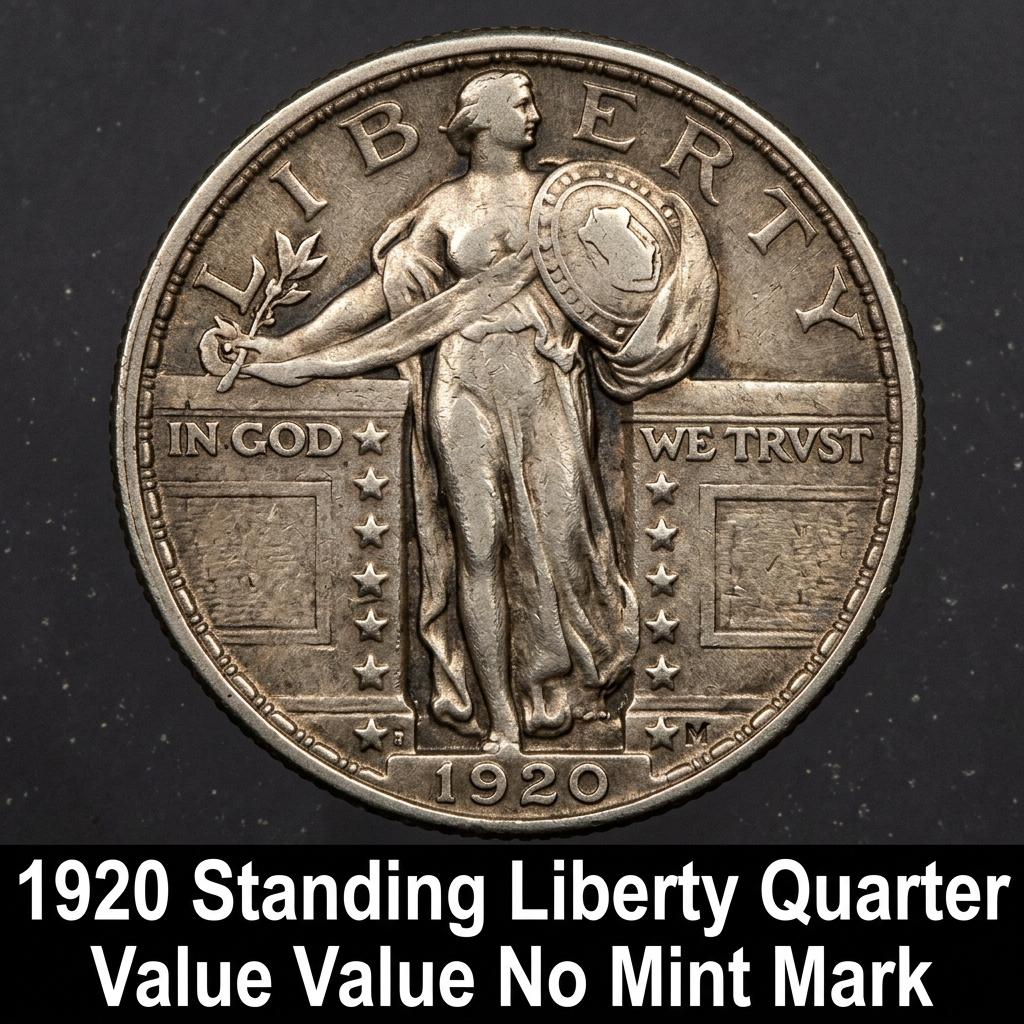
The 1920 Standing Liberty Quarter (no mint mark) is worth anywhere from $10 to $25 in heavily worn condition, rising to $75–$200 in fine to extremely fine grades, and potentially $500 or more in mint state. If you found one of these beautiful coins in an old collection or tucked away in a drawer, you’re holding a piece of real American history — and it may be worth more than you think.
What Makes the 1920 Standing Liberty Quarter Special
The Standing Liberty Quarter series, designed by sculptor Hermon Atkins MacNeil, ran from 1916 to 1930. The 1920 Philadelphia issue — identified by the absence of a mint mark — was struck at the Philadelphia Mint and had a mintage of over 27 million coins.
That sounds like a lot, but nearly a century of circulation, wear, and attrition means truly well-preserved examples are surprisingly scarce today. The design itself is stunning, featuring Liberty in a flowing robe holding a shield, with an eagle in flight on the reverse.
Collectors and everyday people alike are often surprised when they use a coin identifier and value app to look up this coin and discover how quickly the value climbs with better preservation. Even moderately worn examples carry solid premiums above face value.
Your Old Coin Could Be Valuable!
Identify It & Know Its Real Value — Free Download
1920 Standing Liberty Quarter Value by Grade
Coin value depends almost entirely on condition. The Standing Liberty Quarter is especially sensitive to wear because Liberty’s head and shield details are among the first areas to flatten out. Here’s a general breakdown of what the 1920 no mint mark quarter is worth across grades:
Your Old Coin Could Be Valuable!
Identify It & Know Its Real Value — Free Download
| Grade | Description | Estimated Value |
|---|---|---|
| AG–G (About Good to Good) | Heavily worn, design visible | $10 – $18 |
| VG–F (Very Good to Fine) | Moderate wear, main features clear | $20 – $40 |
| VF–EF (Very Fine to Extremely Fine) | Light to moderate wear, sharp details | $50 – $150 |
| AU (About Uncirculated) | Slight wear on high points only | $175 – $300 |
| MS-63 to MS-65 (Mint State) | No wear, strong luster | $400 – $1,000+ |
For the most current auction results and retail price trends, you can check out this detailed 1920 Standing Liberty Quarter price data across mint state grades — it’s a great resource to see what these coins are actually selling for right now.
How to Tell If Your 1920 Quarter Has No Mint Mark
Identifying the mint mark on a Standing Liberty Quarter is simple once you know where to look. Flip the coin to the obverse (front side) and look just above the date, near the lower right area of the shield.
Your Old Coin Could Be Valuable!
Identify It & Know Its Real Value — Free Download
Coins from the San Francisco Mint carry an “S,” and Denver coins carry a “D.” If you see nothing there, your coin was made in Philadelphia — no mint mark was used by Philadelphia during this era.
The 1920-S and 1920-D varieties can carry different values, so confirming your coin has no mint mark is an important first step before looking up pricing. The CoinKnow app makes this easy — you can photograph your coin and it will identify the mint mark and pull up current value estimates automatically.
Your Old Coin Could Be Valuable!
Identify It & Know Its Real Value — Free Download
What Affects the Value Beyond Grade
Grade is the biggest factor, but it’s not the only one. Strike quality varies considerably in the Standing Liberty Quarter series — some coins came out of the dies with soft, shallow details even before they ever circulated. A coin with a sharp, well-struck date and full head detail on Liberty commands a significant premium.
Full Head (FH) is a special designation used by PCGS and NGC for Standing Liberty Quarters where Liberty’s head shows complete, crisp detail. A 1920 no mint mark quarter certified as MS-63 Full Head can be worth two to three times more than a non-FH example in the same grade.
Toning also plays a role. Natural, original silver toning is generally considered desirable to collectors, while cleaned or polished coins lose significant value. If your coin has been wiped or dipped, expect values toward the lower end of the range.
For a well-organized breakdown of 1920 quarter values across all conditions and mint marks, that resource offers a clear and easy-to-follow guide — perfect if you want to compare your coin to the full picture.
Your Old Coin Could Be Valuable!
Identify It & Know Its Real Value — Free Download
Should You Get Your 1920 Standing Liberty Quarter Graded?
If your coin appears to be in AU or better condition, professional grading by PCGS or NGC is absolutely worth considering. Certified coins sell for significantly more than raw (ungraded) coins, especially in the mint state range.
The cost of grading typically runs $20–$50 per coin depending on the service tier. If your coin looks like it could grade MS-63 or higher, you could recoup that cost many times over at auction.
Not sure what grade your coin might be? CoinKnow offers a quick and free first look — just snap a photo and let the app give you an initial condition assessment before you decide whether professional grading makes financial sense.
Your Old Coin Could Be Valuable!
Identify It & Know Its Real Value — Free Download
Frequently Asked Questions
Q: How do I know if my 1920 Standing Liberty Quarter is valuable?
A: Start by checking the condition. Look for sharp detail on Liberty’s shield, head, and gown. The sharper and less worn those features are, the higher the value. A coin in fine condition is worth around $20–$40, while an uncirculated example can easily reach $500 or more.
Q: What does “no mint mark” mean on a 1920 quarter?
A: It means the coin was struck at the Philadelphia Mint. Philadelphia did not use a mint mark during this period. You’ll want to look just above the date on the front of the coin — if there’s no letter, it’s a Philadelphia coin.
Q: Is a 1920 Standing Liberty Quarter with no mint mark rare?
A: It’s not rare in lower grades — over 27 million were minted. However, examples in very fine or better condition are considerably scarcer, and Full Head uncirculated specimens are genuinely difficult to find, making them highly sought after by collectors.