1942-D DDO Washington Quarter Value Guide What This Rare Variety Is Worth Today

Your Old Coin Could Be Valuable!
Identify It & Know Its Real Value — Free Download


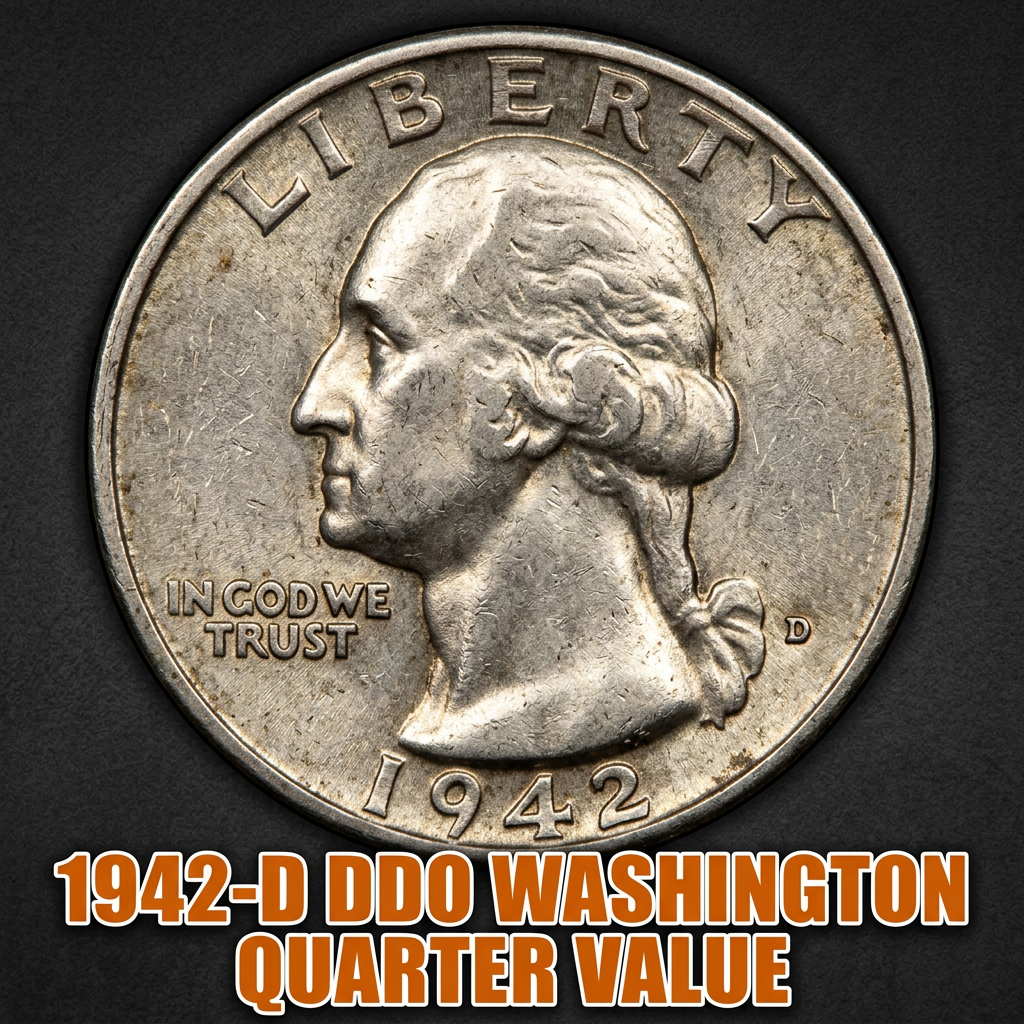
The 1942-D DDO Washington Quarter is worth anywhere from $20 in heavily worn condition to over $500 or more in high mint state grades, with some certified examples commanding even higher prices among variety collectors. If you just found one of these coins in an old collection or at a flea market, you may be holding something genuinely special — and this guide will help you figure out exactly what you’ve got.
What Makes the 1942-D DDO Washington Quarter So Valuable
The “DDO” in this coin’s name stands for Doubled Die Obverse, which is a minting error that occurs when the die used to strike the coin is accidentally impressed more than once at a slightly different angle. The result is a coin where design elements on the front — like Washington’s portrait, the date, or the lettering — appear doubled or show a shadow-like effect.
The 1942-D version of this coin was struck at the Denver Mint (hence the “D” mintmark), and it’s considered one of the more sought-after Washington Quarter varieties from the early 1940s. Doubled die coins are exciting because they’re genuine mistakes that slipped through quality control, making them rare by accident.
Not every 1942-D quarter is a DDO, so it’s worth taking a close look at your coin under magnification before getting too excited. If you’re not sure how to identify variety coins at home, a coin identifier and value app can be a fast and easy starting point. Tools like CoinKnow are designed to help everyday collectors scan their coins and get an instant read on variety identification and estimated value.
Your Old Coin Could Be Valuable!
Identify It & Know Its Real Value — Free Download
How to Identify the Doubled Die Obverse on Your 1942-D Quarter
To spot a genuine DDO on a 1942-D Washington Quarter, you’ll want to use a good coin loupe or magnifying glass — at least 5x to 10x magnification. Focus on Washington’s eye, the date numerals, and the word LIBERTY on the obverse.
Your Old Coin Could Be Valuable!
Identify It & Know Its Real Value — Free Download
On a true DDO variety, you’ll see noticeable doubling in these areas — not just die wear or a reflection from the coin’s surface. Doubling from a real doubled die appears sharp and distinct, almost like a second image layered slightly offset from the first.
It’s also important to check the mintmark on the reverse side. The “D” mintmark should appear just to the right of the bow in the ribbon above the eagle’s head. If your coin has no mintmark, that means it was struck in Philadelphia, which is a different (though also collectible) coin altogether.
Your Old Coin Could Be Valuable!
Identify It & Know Its Real Value — Free Download
1942-D DDO Washington Quarter Value by Grade
Like all coins, the value of a 1942-D DDO Washington Quarter depends heavily on its condition, or “grade.” Coins that show heavy wear and loss of detail are worth less, while coins with original luster and sharp strike are worth significantly more. Here’s a general value range you can reference:
| Grade | Description | Estimated Value |
|---|---|---|
| Good (G-4) | Heavy wear, major details visible | $20 – $35 |
| Very Fine (VF-20) | Moderate wear, most details clear | $50 – $100 |
| Extremely Fine (EF-40) | Light wear on high points only | $100 – $200 |
| About Uncirculated (AU-50) | Slight wear, strong luster present | $200 – $300 |
| Mint State (MS-63+) | No wear, original mint luster | $350 – $500+ |
These are estimates for confirmed DDO examples. For the most up-to-date market data, you can check 1942 Washington Quarter price trends by grade to see what certified specimens are selling for right now.
Your Old Coin Could Be Valuable!
Identify It & Know Its Real Value — Free Download
Should You Get Your 1942-D DDO Quarter Certified
If your coin appears to show genuine doubling and is in decent condition, getting it professionally graded and authenticated can significantly boost its value and saleability. Services like PCGS and NGC are the two most trusted third-party graders in the hobby, and a certified DDO label makes the coin far more appealing to serious buyers.
Certification isn’t free — expect to pay $30 to $50 or more per coin depending on the tier of service — but for a high-grade DDO Washington Quarter, the return on that investment can be substantial.
Before you send it in, use CoinKnow to get a preliminary assessment. The app can help you understand whether your coin is worth the certification fee or if it might be a different variety or post-mint damage.
Your Old Coin Could Be Valuable!
Identify It & Know Its Real Value — Free Download
For a broader look at 1942 quarter values across different conditions and mintmarks, it’s worth reviewing dedicated coin pricing resources to compare your coin against recent auction results.
Where to Sell a 1942-D DDO Washington Quarter
If you’ve confirmed you have an authentic 1942-D DDO Washington Quarter, you have several solid options for selling. Online platforms like eBay, Heritage Auctions, and Great Collections are popular among variety coin collectors and regularly feature doubled die quarters.
Local coin dealers are another option, especially if you want a quick, hassle-free sale — though you may get a lower offer than selling directly to collectors. Coin shows can be a great middle ground where you can get multiple offers in one afternoon.
CoinKnow also provides resources to help you understand current market conditions so you don’t undersell a valuable coin. Knowing your coin’s approximate worth before entering any negotiation puts you in a much stronger position.
Your Old Coin Could Be Valuable!
Identify It & Know Its Real Value — Free Download
FAQ
Q: How do I know if my 1942-D quarter is really a DDO and not just damage?
A: Genuine doubled die doubling is mechanical and shows a clear, consistent offset across multiple design elements — particularly the date, lettering, and portrait. Post-mint damage like scratches or die deterioration looks irregular and uneven. A loupe and side-by-side comparison with reference images will help. An app like CoinKnow can also assist with initial identification.
Q: Is a 1942-D DDO Washington Quarter made of silver?
A: Yes. Washington Quarters struck before 1965 contain 90% silver and 10% copper. Even a heavily worn 1942-D quarter has melt value based on its silver content, which adds a baseline floor to the coin’s worth regardless of the DDO variety premium.
Q: Can I find the value of my 1942-D DDO quarter without visiting a dealer?
A: Absolutely. Online pricing databases, recent auction records, and tools like the coin identifier and value app make it easier than ever to get a solid estimate from home. Just remember that a professional appraisal or certification is the most reliable way to confirm both authenticity and grade.